



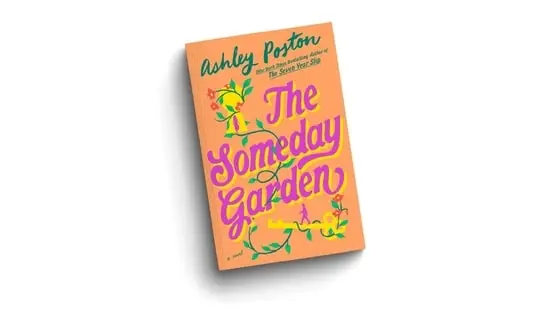
There is a particular cruelty to Ashley Poston’s The Someday Garden. Grief takes root in this fertile ground, flowering into something beautiful, bewildering and occasionally overgrown. Poston captures how postponement can feel like a promise until time turns it into a tomb for all the lives we imagined living.
Horticulturist Sophie Drear returns to Lilymoor House and Gardens in coastal Maine to fulfil a promise made a decade earlier to her best friend Harrie, who is now dead. As Sophie works amid the estate’s unruly gardens, a mysterious blue door appears, leading to a secret garden. Inside, Sophie encounters Cyrus, a man trapped by its peculiar magic. As Lilymoor prepares for its bicentenary, Sophie must decide whether the past deserves another season of her life.
Poston’s most haunting invention is the garden’s shifting geography. The door never stays put; the future, too, refuses to be mapped. Cyrus is imprisoned by magic, Sophie by memory, and both must confront the peculiar loneliness of being left behind. Their romance unfolds out of sequence: Sophie already loves Cyrus when, for him, their story is only beginning. It is a deliciously cruel arrangement, asking whether love can survive the terrible asymmetry of remembering what another person has yet to experience.
Then there is Harrie, who collected untranslatable words, and the hedge maze, said to carry the voice of one’s truest love. Sophie hears her dead friend there. She also turns to a Magic 8 Ball for Harrie’s advice, as if grief might still answer questions if one knew how to ask. Sophie fears that moving forward might mean leaving Harrie behind. But memory is a poor graveyard for a living heart.
These details are devastatingly small, and bereavement makes relics of ordinary things. Even a toy oracle becomes a lifeline when the person you need is beyond reach. At times, Poston lets enchantment do the emotional work her characters should be doing. The love triangle loses its tension, and the garden’s mysteries are more evocative than convincing. The prose sometimes polishes sorrow until its roughest edges disappear. Yet the novel understands a truth many romances sentimentalise: guilt can masquerade as devotion.
Lilymoor’s flowers do not ask permission to bloom after loss. Neither, eventually, must Sophie. The Someday Garden is imperfectly tended, but its central ache endures: how many tomorrows must we sacrifice to keep yesterday alive?
Title: The Someday Garden
Author: Ashley Poston
Publisher: HarperCollins
Price: ₹699
For more, follow @htcity.delhijunction