



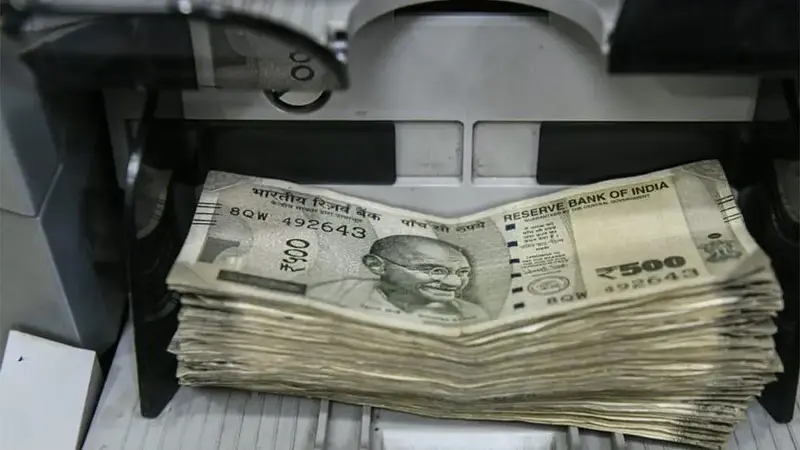
On October 7, the rupee touched ₹96.85 to the dollar, perilously close to its record low. Within days, the Reserve Bank of India unveiled one of its most sweeping currency-defence packages since 2013: a special dollar window for three state-owned oil refiners, a 20% reserve requirement on large rupee-linked FX derivatives, tighter limits on speculative hedging, higher daily cash-reserve maintenance and bond sales to drain liquidity.
The measures worked, at least for now. The rupee appreciated for eight consecutive sessions to ₹94.47 per dollar on October 21, gaining 2.45% and recording its longest winning streak in eight years. Yet the real question is not whether the RBI can defend the rupee this month. It is whether India can build an economy that does not need such dramatic defence every time global capital turns hostile.
The answer, at present, is no.
The RBI has done what a competent central bank must do in a crisis: slow the panic, restore two-way movement and prevent disorderly collapse. But this is a firewall, not a foundation.
The special window for Indian Oil, Hindustan Petroleum and Bharat Petroleum shifts an estimated $10–12 billion of monthly oil-related dollar demand away from the spot market. It changes where the demand appears, not whether India needs the dollars. The country still imports the crude; the RBI absorbs the pressure through its reserves.
That distinction matters. India's reserves fell by $8.58 billion to $726.03 billion in the week ended October 9, extending a recent sequence of weekly declines. The headline number remains large; its direction, composition and cost are the real story.
India's vulnerability is deeper than speculation. Speculators amplify a crisis; they do not create it. The current account deficit has narrowed to around 0.5% of GDP from about 2.5% three years earlier, yet the rupee remains pressured because tighter global financial conditions and persistent foreign-portfolio outflows have made even a smaller deficit harder to finance.
SBI data show FPI equity outflows of ₹3.51 lakh crore from 2021 to September 2026, including more than ₹2.61 lakh crore in 2026 alone. Brent crude was around $110 per barrel on October 21. Economists expect an FY27 current-account deficit of 1–1.5% of GDP to be difficult to finance.
This is the real weakness: India has reduced its current-account deficit but not its dependence on volatile external financing.
India has been here before. During the 2013 taper tantrum, the RBI used intervention, monetary tightening, gold-import curbs, a dollar window for oil companies and concessional FCNR(B) swaps. The measures stabilised the rupee and attracted more than $34 billion. But reserves had fallen to $274.8 billion by September 2013, covering just under seven months of imports. The crisis was managed; the model was not transformed.
The present package repeats part of that playbook, with one difference. In 2013, the RBI used repayable swaps. In 2026, the OMC arrangement involves direct dollar sales without a required reversal. That is powerful in the short run, but more demanding on reserves over time.
Global experience reinforces the warning. Malaysia's 1998 capital controls helped prevent panic but did not by themselves create prosperity. Chile's encaje changed the composition of capital inflows but did not materially alter their total volume. Brazil's IOF tax may have changed the mix of inflows, while its effect on their size remained debatable. The lesson is consistent: emergency tools can buy time, but they cannot manufacture competitiveness, energy security or durable capital.
There is also a quieter vulnerability. The RBI transferred a record ₹2.87 lakh crore surplus to the government for FY26, after providing ₹1.09 lakh crore to its Contingent Risk Buffer. A transfer does not directly deplete forex reserves, but maximising annual transfers can constrain the central bank's capacity to retain the financial-stability capital needed for sustained currency defence. In a world of volatile flows, part of the RBI's surplus should be treated as national financial-stability capital, not merely fiscal revenue.

India needs a sequenced strategy. Immediately, preserve the OMC window but exempt genuine trade hedges from the harshest derivative costs. In the near term, create a National Hedging Facility offering affordable, transparent hedging to smaller exporters and importers. In the medium term, shift from reversible portfolio flows toward FDI, export-linked investment and long-tenor financing. Structurally, reduce the dollar intensity of growth through electrification, public transport, freight efficiency, renewables, storage and industrial energy efficiency.
The boldest solution is a National External Resilience Compact: a statutory, decade-long framework with a Rupee Resilience Account, deeper rupee internationalisation, affordable hedging and limits on short-term external liabilities.
The goal is not to make the rupee stronger at any cost. It is to make India less dependent on defending it.
The rupee will become strong not when the RBI defends it more fiercely, but when India needs to defend it less often. That is the difference between managing a crisis and mastering a century.
[Major General Dr. Dilawar Singh, IAV, is a distinguished strategist having held senior positions in technology, defence, and corporate governance. He serves on global boards and advises on leadership, emerging technologies, and strategic affairs, with a focus on aligning India's interests in the evolving global technological order.]