


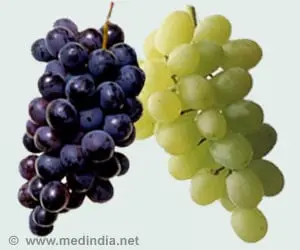
Chennai, June 30 -- Highlights:
* Myth: Viral posts wrongly suggest that eating grapes alone protects the skin from harmful UV rays
* Fact: Grapes contain natural antioxidants that may support the skin's //response to UV damage but do not block ultraviolet radiation
* Verdict: Misleading. Grapes can complement a healthy diet but cannot replace sunscreen or other proven sun protection measures
While eating grapes may support your skin's natural response to UV damage because of their antioxidant polyphenols , they do not protect your skin from the sun or replace sunscreen . Proven sun protection still requires sunscreen , protective clothing, and limiting excessive sun exposure.
Sunscreen Is Vital-No Diet Can Replace It
A widely shared health claim suggests that eating grapes every day can naturally protect the skin from harmful sunlight. Some social media posts go further, implying that regular grape consumption can prevent sunburn or reduce the need for sunscreen.
The claim is based on the fact that grapes are rich in plant compounds called polyphenols , including resveratrol, flavonoids, and proanthocyanidins. These antioxidants help reduce oxidative stress, which occurs when harmful molecules generated by UV exposure damage skin cells. While this scientific background is real, it does not mean grapes provide complete protection from ultraviolet radiation.
Eating Grapes May Support Skin Health, Not Completely Block UV Rays
Research has shown that grape consumption may improve the skin's natural response to UV exposure in some people. Small human clinical studies found that participants who consumed grape powder for several weeks showed greater resistance to UV-induced skin redness and changes in biological markers linked to oxidative stress and DNA repair. However, these benefits varied among participants, and the studies involved relatively small groups of adults using grape powder rather than fresh grapes ( ref1 ), ( ref2 ).
Researchers believe grape polyphenols may help reduce inflammation and support the body's natural repair processes after UV exposure. These effects may contribute to healthier skin but are not equivalent to blocking UV rays , which is how sunscreen works. A 2024 review also concluded that grapes show promise as a nutritional support for skin health, but more large-scale studies are needed before firm recommendations can be made ( ref3 ).
Claim vs. Scientific Evidence Claim Scientific Evidence Eating grapes alone can protect your skin from the sun. Not supported by scientific evidence. Clinical studies show grapes may support the skin's response to UV damage but do not provide protection equivalent to sunscreen (), (), (). Grapes contain antioxidants. Supported by scientific evidence. Grapes are rich in polyphenols, including resveratrol, flavonoids, and proanthocyanidins (). Grapes may support the skin's response to UV damage. Supported by small human clinical studies. Research suggests a potential supportive effect, but larger studies are needed before firm recommendations can be made (), (). Sunscreen is still needed for sun protection. Strongly supported by scientific evidence. Grapes should complement, not replace, sunscreen and other proven sun protection measures (), (), ().
Why Grapes Can't Replace Sunscreen
There is a huge difference between supporting skin health and preventing UV damage .
Broad-spectrum sunscreen forms a protective barrier that absorbs or reflects ultraviolet radiation before it damages the skin. Grapes work differently. Their nutrients are absorbed through digestion and may help the body's cells respond to oxidative stress after UV exposure, but they do not stop ultraviolet rays from reaching the skin.
Replacing sunscreen with grapes could leave people vulnerable to sunburn, premature skin aging, and an increased risk of skin cancer. No clinical study has shown that eating grapes provides the level of protection achieved with sunscreen or other established sun safety measures.
Doctor-Approved Tips to Protect Your Skin from the Sun
Grapes are a nutritious fruit that provides vitamins, minerals, fiber, and antioxidants, making them a healthy addition to a balanced diet. While they may help support the skin's natural response to UV damage, they should not be viewed as a substitute for evidence-based sun protection .
To reduce the risk of UV-related skin damage:
* Use a broad-spectrum sunscreen with SPF 30 or higher.
* Wear protective clothing, sunglasses, and a wide-brimmed hat.
* Seek shade during peak sunlight hours.
* Eat a balanced diet that includes antioxidant-rich fruits such as grapes.
Scientists also caution that the available evidence has limitations. Most studies involved a small number of participants, evaluated grape powder instead of fresh grapes, and followed people for only a short period. Researchers are still studying the ideal intake, long-term benefits, and why some individuals respond better than others ( ref2 ), ( ref3 ).
Final Verdict: Sunscreen Is Vital!
Scientific evidence suggests that grapes contain natural antioxidants that may support the skin's response to UV-related damage. However, there is no evidence that eating grapes alone prevents sunburn, blocks ultraviolet rays, or provides protection comparable to sunscreen . For healthy skin, enjoy grapes as part of a balanced diet, but continue following proven sun safety practices such as using sunscreen, wearing protective clothing, and avoiding excessive sun exposure.
medfaq
References:
* How oral grape consumption supports the effects of sunscreen with broad spectrum SPF 30 against ultraviolet-induced skin damage: Clinical evidence. - (https://pmc.ncbi.nlm.nih.gov/articles/PMC7073656/)
* Grape consumption and human skin resistance to ultraviolet damage: A clinical study. - (https://pmc.ncbi.nlm.nih.gov/articles/PMC9774720/)
* Grapes and skin photoprotection: Emerging evidence and biological mechanisms. - (https://pmc.ncbi.nlm.nih.gov/articles/PMC12621086/)
Source-Medindia