



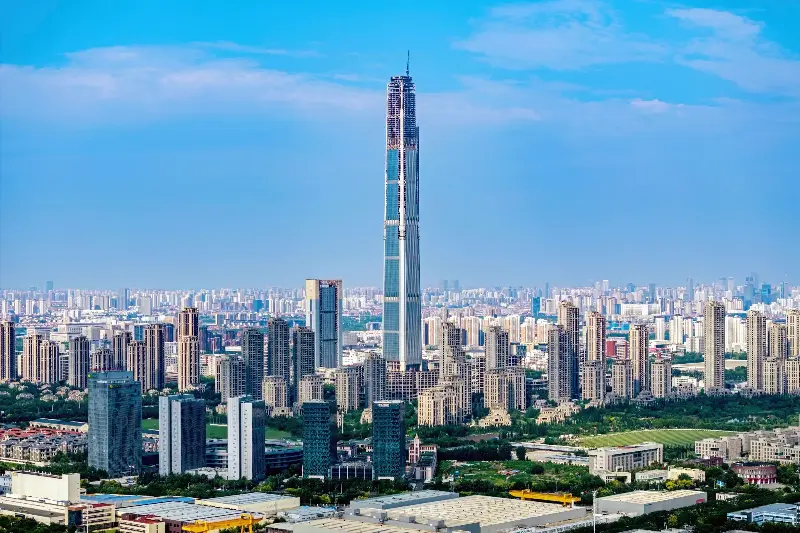
China’s Tianjin 117 Tower is set to gain another record when it opens: the world’s tallest elevator in a building.
Also known as the Goldin Finance 117 or China 117 Tower, Tianjin 117 holds the Guinness World Records title as the world’s tallest unoccupied building.
Named for its 117 above-ground floors, the skyscraper in Tianjin, north China, rises nearly 600 meters (about 1,968 feet).
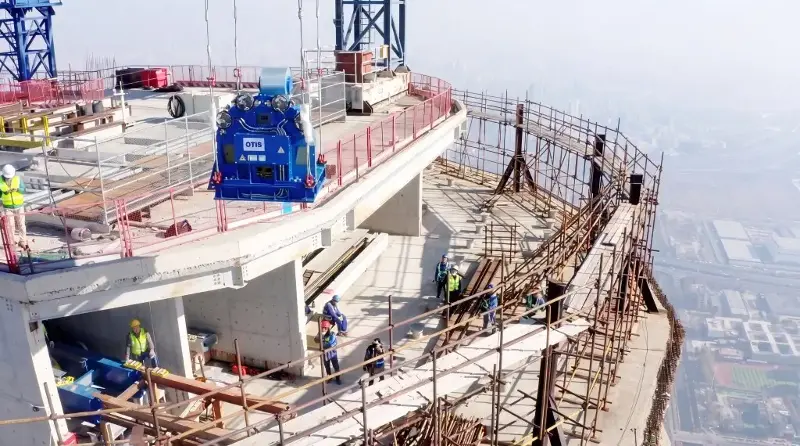
This week, Connecticut-based Otis announced it will supply 251 elevators and escalators throughout the tower, having been selected as the sole provider of the building’s integrated vertical transportation system. Among them will be two Otis SkyRise elevators featuring maximum rises of more than 597 meters (1,958 feet), creating what the company describes as “the world’s longest elevator hoistways in a building.”
The current Guinness World Records holder for the tallest elevator in a building is the NexWay high-speed elevator in Shanghai Tower, which rises around 578 meters (1,898 feet).
Designing elevators that can travel nearly 600 meters presents challenges far beyond those in conventional skyscrapers.
“The key engineering challenge in designing high-rise elevators is delivering a safe, quiet, and comfortable ride at very high speeds,” Lucien Wedzikowski, vice president of global major projects at Otis, told Newsweek.
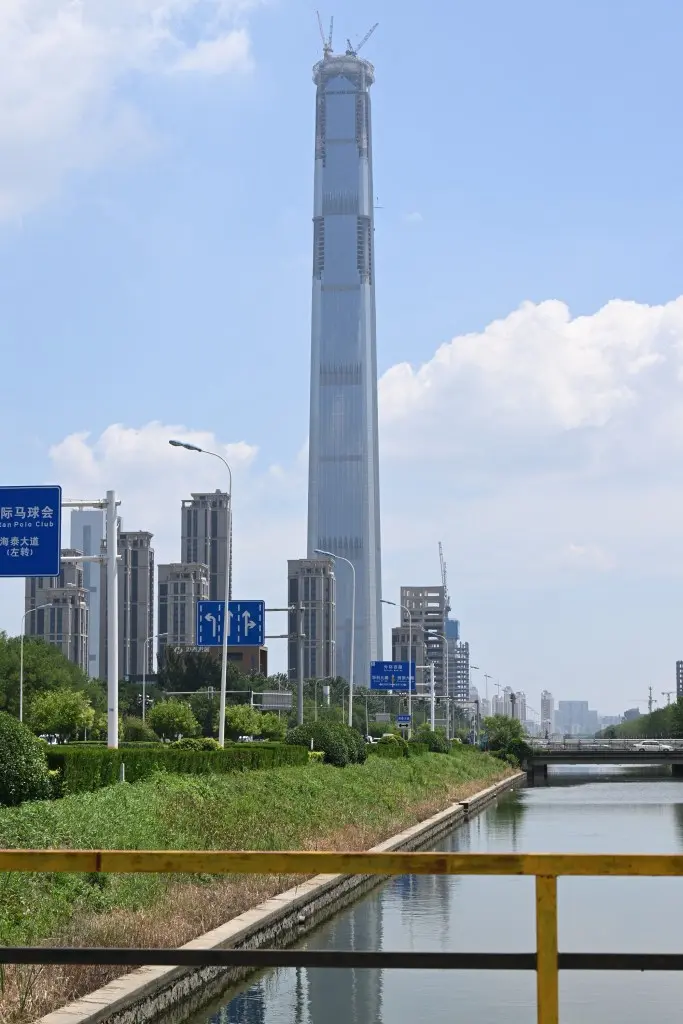
According to the Skyscraper Center of the Council on Vertical Urbanism, Tianjin 117 has already architecturally topped out and is currently the tallest building under construction in China. Once completed, it is expected to become the country’s third-tallest building.
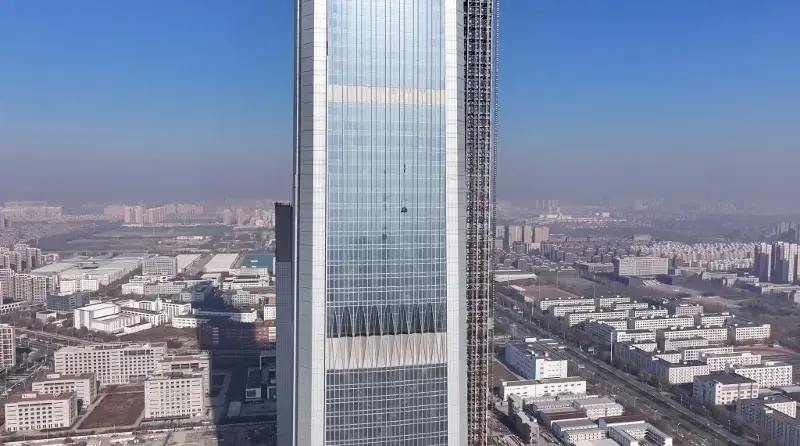
Earlier this year, the building marked a milestone nearly 18 years after its construction first began when workers installed a 7.6-tonne diamond-shaped crown atop the structure in late March, according to Chinese state media reports.
The tower will also host China’s highest occupied floor at more than 584 meters (around 1,916 feet), according to Otis.
China remains one of the world’s most active skyscraper markets, with dozens of supertall towers under construction or nearing completion. Notable projects include the 498-meter (1,634 feet) China International Silk Road Center in Xi’an, a supertall mixed-use tower, and the 489-meter (1,604 feet) KPF Tianfu Tower in Chengdu, another major high-rise project reshaping western China’s skyline.
Safe embed will be rendered here
The Advanced Technology Behind the World's Tallest Elevator in a Building
Service URL: https://public.flourish.studio/visualisation/30023215/embed
Engineering for Extreme Heights
While many elevator systems perform efficiently in shorter buildings, Wedzikowski explained that greater travel distances require much faster operation. He noted that “high-rise elevators are engineered to accelerate and decelerate seamlessly while reaching speeds of up to 12 meters per second.”
At Tianjin 117, however, engineers faced additional complications because of both the extraordinary length of the hoistways and the movement of the supertall tower itself. Wedzikowski said Otis conducted advanced simulations to study how elevator ropes would behave and how wind and building motion could create rope sway.
According to Wedzikowski, the engineering solutions developed for Tianjin 117, including rope-sway analysis, building-motion monitoring, aerodynamic cab design, advanced traction systems, and ride-control technologies, are directly applicable to the growing number of supertall and megatall towers planned worldwide.
Similar to Race Car Aerodynamics
Another critical challenge involves aerodynamics. “At high speeds, elevators must manage significant air pressure and airflow within the hoistway,” Wedzikowski said.
To address this, Otis developed specialized aerodynamic shrouds positioned above and below elevator cabs, while engineers carefully designed airflow throughout the shaft. Wedzikowski compared the approach to aerodynamic improvements used in race cars, saying the features help provide a smoother, more efficient passenger experience.
He added that engineers designed the elevator cabs using computational fluid dynamics and then tested them in wind tunnels to reduce the effects of changing air pressure and aerodynamic forces. The guide rails directing the elevators’ movement also require exceptionally precise installation to minimize vibration and noise.
The result, he said, will let passengers travel the full height of the building in a single trip, eliminating the need to transfer at an intermediate sky lobby.
Do you have an architecture or design-related story to share? Let us know via [email protected], and your story could be featured by Newsweek.
Contact Newsweek editors on this story: Sirena Bergman and Sam Wilson.