



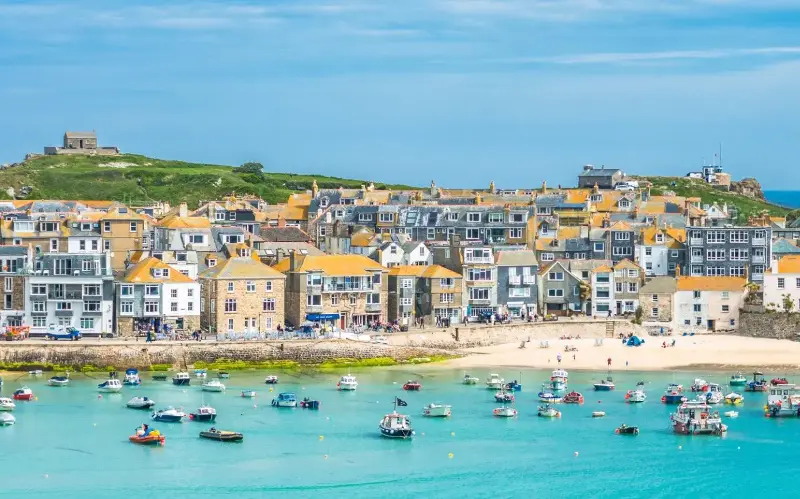
When I say I live in Cornwall, a wistful yearning often comes over the person I’m talking to. The very mention of the county takes them back to childhood beach holidays or weekends walking sections of its glorious coastal path – this is a place where time appears to have stood still.
Yet, hidden behind the stone walls of remote farmhouses and former fishermen’s cottages are stylish places to stay, and former seaside cafés have been given a new lease of life by acclaimed chefs while historical inns serve up grass-reared beef and foraged plants alongside fish fresh from the sea. The largely unspoilt coastline inspires Enid Blyton-style adventures: tripping through fields fringed with wildflowers to a secluded beach; digging around in rockpools that are works of marine art, and swimming with seals or learning to surf a wave.
Beyond the beach there is plenty to entertain, from wildlife conservation centres and hands-on farm experiences aimed at children, to historical sub-tropical gardens, steam railways and working mines – reminders of the county’s rich industrial heritage. A few days of breathing clean Cornish air, eating fresh, local produce and sleeping deeply in a clifftop eyrie is the perfect antidote to the stress of city living.
In this guide:
- The perfect weekend
- How to spend a week
- When to go
- Where to stay
The perfect weekend
To experience Celtic Cornwall – the land of prehistory, of Ross Poldark and of ancient trails along granite crags above an azure sea – you should base yourself in the far west. St Ives has a plethora of accommodation (try Trevose Harbour House, from £245, or the Beach Lodges at Carbis Bay, from £407), award-winning beachside dining, and streets packed with art galleries and craft shops.
Unless your accommodation comes with parking, leave the car at St Erth station and enjoy the scenic train ride into town as Victorian holidaymakers once did. Art lovers will want to spend a day at Tate St Ives and Barbara Hepworth’s home and studio or, if the weather is fine, stride out west along the coast path into the landscape that inspired her.
There is no better place to dine than Porthmeor Beach Café where you can watch the sun go down over the Atlantic. If the café is full, try its sister restaurants: West Porthmeor for sourdough pizzas and grilled Greek dishes. Upstairs, the Fish Shed serves perfectly cooked catch of the day and crab-loaded chips.
Devote a whole day to touring the Land’s End peninsula by car (or use the hop-on-hop-off Land’s End Coaster bus from Penzance to Land’s End: route 1/1A). Start by heading south to Marazion for the boat service across to St Michael’s Mount. Its medieval castle, set in terraced gardens filled with tropical plants, looks very handsome after its recent restoration. Journey on west to the famed sands of Porthcurno and the magical open-air Minack Theatre, a good spot for lunch whatever the weather. You may even catch a matinee.
Land’s End, England’s most-westerly point, was known as Belerion, Seat of Storms, by the Romans. To get a real sense of what this means, walk back there along the cliffs from Sennen Cove.
The north coast from Pendeen to St Ives crosses a landscape of timeless beauty: drystone walls dating back to the Iron Age radiate from ancient farmsteads enclosing luminous green fields that stretch from moor to sea. Drop into the village of Zennor for a pint in the 13th-century Tinners Arms before returning to St Ives. You will have earned supper at the town’s other famous beach restaurant, the Porthminster Beach café.
How to spend a week-long holiday
Falmouth is a lively port city, thanks to the nearby university and one with a long seafaring history. Stay either in town (Merchants Manor, from £236) or along the peaceful Helford River (Budock Vean, from £163) where Koru Kayaking offers guided kayak trips to Frenchman’s Creek, made famous by Daphne du Maurier.
This part of Cornwall is famous for its sub-tropical gardens: Trebah, Glendurgan and Trelissick are the stand-outs; all tumble down to the water’s edge and have plenty to keep families entertained. Trelissick can be reached on one of the regular pleasure boats that run from Falmouth to Malpas near Truro. A shuttle bus takes passengers into Truro which has a fine cathedral and the renovated county museum. Alternatively, cross by foot ferry to pretty St Mawes for afternoon tea on the terrace of the Idle Rocks Hotel and enjoy a grandstand view of the yachting harbour.
If the thought of navigating narrow roads between high hedges doesn’t scare you, take the King Harry car ferry across the Fal to the Roseland peninsula for a rollercoaster drive through the historical fishing communities of Gorran Haven, Porthluney Cove and Portloe. There are plenty of chances to stop for a dip (Caerhays Beach is the best) before visiting the Lost Gardens of Heligan near Mevagissey, a brilliant reclamation of a productive Victorian estate garden.
Round off the week with a couple of nights on the dramatic north coast. The best places to stay lie just beyond the big resorts such as Lewinnick Lodge on the Pentire Headland outside Newquay (from £197) and Watergate Bay (hotel and self-catering apartments from £300) where expert tutors at Wavehunters welcome everyone, from beginners to experts, for surfing and stand-up paddleboarding lessons. Walk along the beach towards Newquay where the cliff face is layered in myriad shades of blue and ochre.
The Eden Project, brainchild of Tim Smit of Heligan fame, and the National Trust’s Lanhydrock House, both within a 30-minute drive, are ideal refuges on a rainy day. Afterwards drop into the 15th-century St Kew Inn for a pint of Cornish Rattler cider; pre-book its signature dayboat whole fish cooked over a wood fire.
Return to index
When to go
Spring comes early here. Daffodils bloom in January and camellias and magnolias in mid-February, when many gardens open to the public. Himalayan azaleas, rhododendrons and daphnes are at their best in April and May is the peak month for hedgerow flowers and edible plants.
June and July are usually dry and warm, never hot. August can be wet and the roads get clogged with traffic. September and October are usually glorious; the water is at its warmest and the surf’s up. Winters are mild and damp, perfect for exploring the sheltered valleys with their own micro-climate on the Land’s End and Lizard peninsulas.
Return to index
How to get there and how to get around
Cornwall is the westernmost extremity of England and getting there can feel painfully long from much of the UK. Flying to Newquay is the most direct route. easyJet flies from London Gatwick, Manchester and Glasgow; Loganair from Aberdeen, Glasgow, Manchester and Newcastle; Ryanair from Dublin, Edinburgh and London Stansted, and Aer Lingus from Belfast and Dublin.
If you have more time, the train from London to Penzance is five hours on Great Western Railways. Advance fare tickets are released 11 weeks before travel, from £90 return. If you opt to drive, don’t use the “shortest route” option on your sat-nav. It will take you off faster A-roads and down lanes no wider than a car. Never use it to navigate around fishing ports as you’ll end up on footpaths. The wise use the park-and-ride schemes.
There is a patchy bus service county-wide, with extra summer services in tourist areas. The River Fal has a linked network of ferries, boats, buses and trains to explore the river estuary between Falmouth, St Mawes and Truro. To reach the Isles of Scilly, which lie 30 miles offshore, take the daily ferry from Penzance or light aircraft from Newquay or Land’s End. There’s also a helicopter from Penzance to Tresco and St Mary’s. Most towns and larger villages have a metered taxi service. Ask in the pub or village shop for a taxi number.
Where to stay
Best for families
There’s free childcare at Fowey Hall Hotel (family rooms from £248 per night) so parents can enjoy the spa or a romantic dinner. Older children will love the Bedruthan Hotel and Spa Hotel (rooms from £209 per night) which has a range of supervised activities.
Best for spa breaks
The Scarlet Hotel (rooms from £360 per night): adult-only and eco-friendly with clifftop hot tubs above Mawgan beach. For a serious health and fitness break, head for St Michaels Resort in Falmouth (rooms from £165 per night) which has a huge range of treatments and classes.
Best escapes into the wild
Clifftop and moorland drama are on the doorstep of The Gurnard’s Head (rooms from £167 per night) on the Land’s End peninsula, while on neighbouring Lizard, Mullion Cove Hotel (rooms from £269 per night) stands in proud isolation on a sunny clifftop.
Return to index
What to bring home
A Cornish art work from St Ives: check out the New Craftsman on Fore Street and the Penwith Gallery on Back Road West. On Fish Street, St Ives Ceramics displays museum-quality works and Earthworks next door sells covetable placemats, cushions and lamps with a seaside theme.
For a fleece beanie or a stylish sunhat visit Claire Francis in her studio at Salt Cellar Hats in Porthleven.
The county is filled with award-winning nurseries: check out Duchy Nursery in Lostwithiel or Trevenna Cross on the A394 at Breage near Helston.
Forgotten to buy a present? Drop by the Mid Cornwall Galleries on the A390 at St Blazey Gate.